


Across construction sites, utility corridors, solar farms, and commercial rooftops, a quiet shift has taken hold. Instead of sending workers up ladders, scaffolding, or bucket trucks, more companies are calling in drone inspection companies to do the job from the air. What started as a niche service for a handful of forward-thinking industries has become a standard part of how businesses maintain their assets, manage risk, and plan budgets.
This isn't just a trend driven by flashy technology. It's a practical response to real problems: inspections that used to take weeks now take days, workers no longer need to climb into dangerous positions, and the data collected is more detailed and consistent than anything a clipboard and a pair of binoculars could produce. Here's a closer look at why businesses are making the switch, and what's actually driving the decision.
Traditional inspections often require personnel to physically access hazardous locations — climbing transmission towers, walking steep rooftops, entering confined spaces, or working near energized electrical equipment. Each of these tasks carries real risk: falls, electrical exposure, heat stress, and exposure to unstable structures after storms or disasters.
Drone inspection companies remove people from that equation. A trained pilot can fly a drone close enough to capture detailed imagery of insulators, conductors, roofing membranes, or turbine blades without anyone setting foot on the structure. For businesses managing large portfolios of physical assets, this alone is often reason enough to make the switch — fewer safety incidents mean fewer injuries, less liability exposure, and less disruption to operations.
Ground-based inspections are inherently slow. A crew checking miles of pipeline, a sprawling solar array, or a multi-building commercial property has to move methodically, often structure by structure. Weather, terrain, and accessibility issues add further delays.
Drones cover the same ground in a fraction of the time. A single flight can capture imagery across long stretches of infrastructure that would otherwise take a ground crew days to walk. For businesses that need to inspect assets after a storm, before a seasonal deadline, or on a recurring maintenance schedule, that speed translates directly into faster decision-making and less downtime.
Speed matters, but the quality of information drones collect is just as important. Modern inspection drones carry high-resolution zoom cameras, thermal sensors, and in some cases LiDAR systems. This lets drone inspection companies capture:
That data is typically delivered as organized digital reports — geo-tagged photos, flagged defects, and side-by-side historical comparisons. Instead of a technician's handwritten notes, engineering and maintenance teams get a dataset they can actually act on, prioritize, and track over time.
Businesses don't adopt new inspection methods purely for safety or convenience — the numbers have to work too. Drone inspections tend to reduce costs in a few concrete ways:
For companies managing utility infrastructure, solar installations, commercial roofs, or large construction projects, these savings compound across dozens or hundreds of inspection cycles a year.
While utilities were early adopters — using drones to inspect transmission lines, substations, and towers across difficult terrain — the same logic has spread to other sectors. Construction firms use drones to track progress and verify work at height. Solar companies rely on thermal drone inspections to catch underperforming panels. Commercial real estate owners use rooftop drone surveys to assess roofing conditions without sending anyone onto a potentially unstable surface. Telecommunications companies inspect towers, and wind energy operators inspect turbine blades, both without the cost and risk of manual climbing.
The common thread is simple: any business with hard-to-reach, hazardous, or expansive physical assets stands to benefit from aerial inspection.
Not all drone inspection services are created equal, and the difference usually comes down to a few factors:
Businesses that take the time to vet these factors tend to get far more value from their inspection programs than those that treat drone service as a commodity purchase.
As drone technology continues to improve — longer flight times, better sensors, and more automated data processing — the gap between manual and aerial inspection will likely keep widening. For businesses weighing the decision, the question is increasingly not whether to adopt drone inspections, but how quickly they can integrate them into routine maintenance planning.
Utilities, solar and wind energy, construction, telecommunications, and commercial real estate are among the biggest users, though any business with hard-to-reach or hazardous assets can benefit.
Savings vary by project, but businesses commonly see reductions in labor costs, emergency repair spending, and equipment rental expenses, since drones often complete in hours what manual crews need days to finish.
In the United States, commercial drone operators must hold FAA Part 107 certification. Reputable drone inspection companies will also carry liability insurance.
Most combine high-resolution zoom cameras with thermal imaging sensors, and many offer LiDAR for precise distance and clearance measurements.
This depends on the asset type, but many businesses schedule routine inspections quarterly or annually, with additional flights after storms or other events that could cause damage.


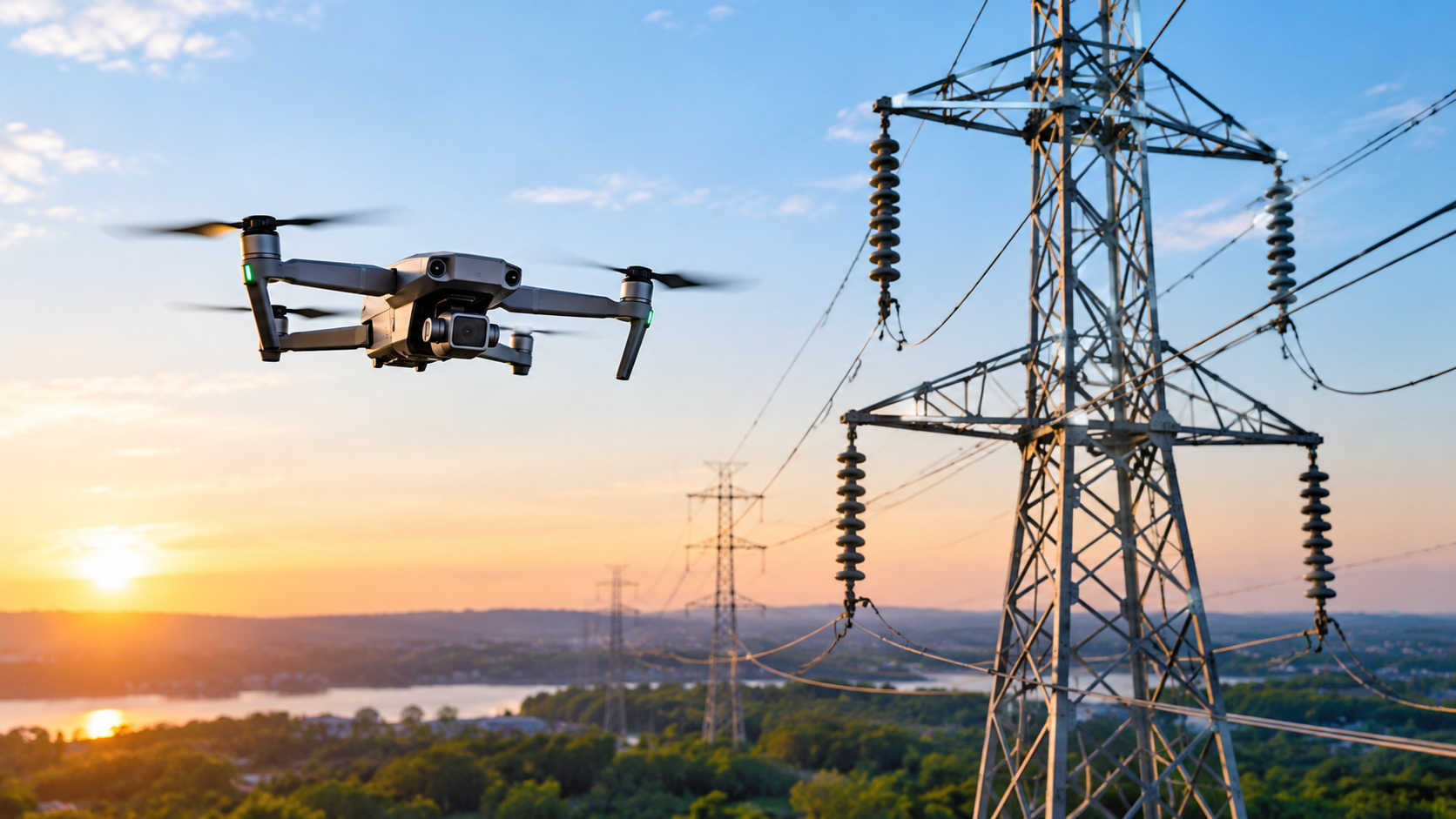
Learn how drones improve aerial utility inspections with faster data collection, enhanced safety, accurate monitoring, and more efficient asset management.
Read article →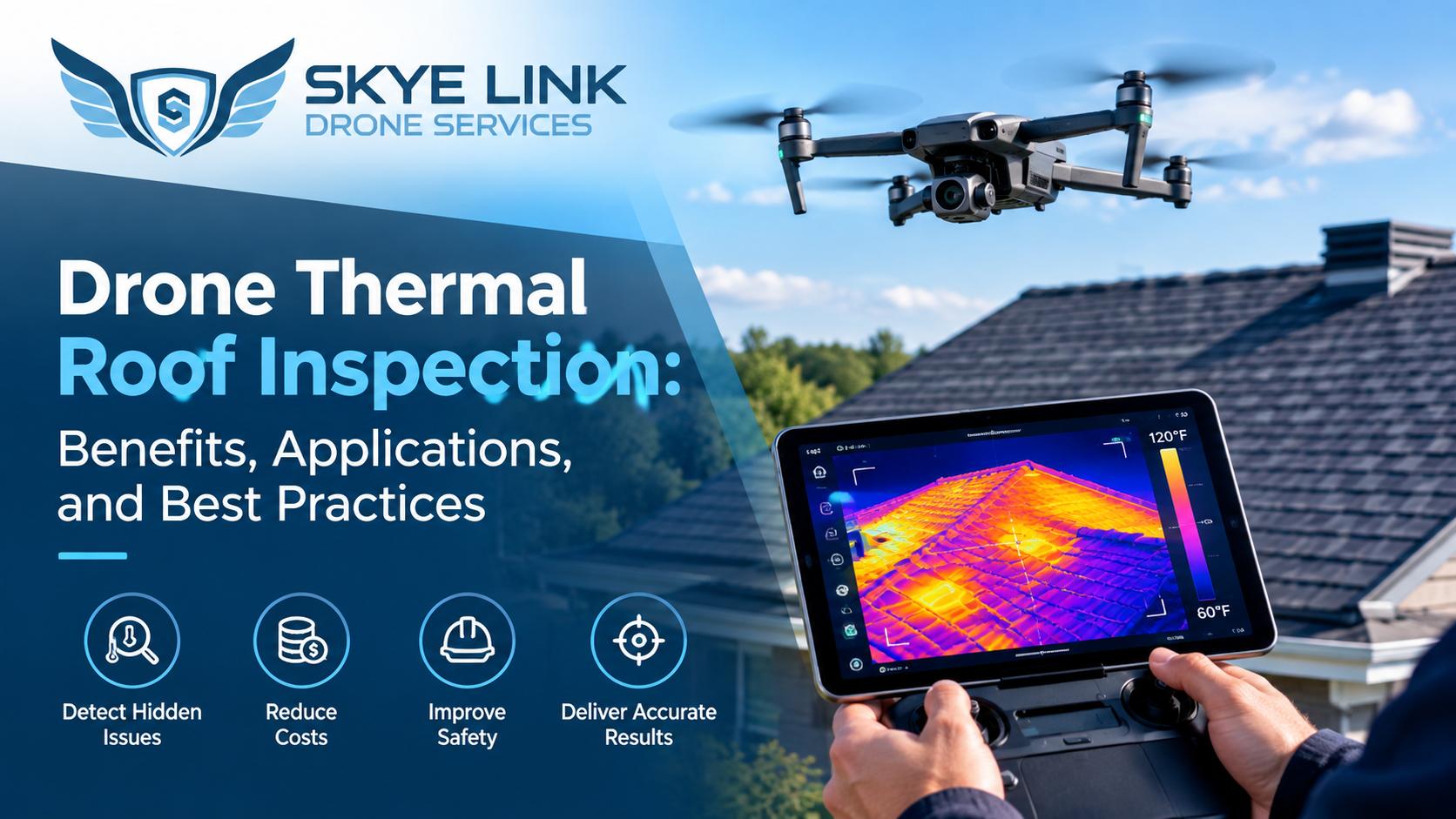
Discover how drone thermal roof inspections detect hidden issues, reduce costs, improve safety, and deliver accurate results with best practices.
Read article →Share your project details and the Skye Link team will recommend the right scope, deliverables, and next steps - usually within 24 hours.
Your operating partner for managed drone data solutions, serving solar, utility, construction, engineering and commercial real estate teams nationwide.Visit skyelink.org
520 Elliot St, Suite 500, Charlotte, NC 28202
(704) 594-5177
contact@skyelink.org



.svg)


