

The goal of this blog is to describe the differences between aerial thermal imaging and traditional inspection techniques in 2026 using examples, trends in the industry, and actual operational requirements.
We want to help facilities teams, energy operators, asset owners, insurers, and construction professionals decide on methods for inspection that enhance security, accuracy, and longevity of asset performance. Key Takeaways
What if your next inspection could reveal hidden risks before they become expensive problems, without putting a single person in danger?
Here’s the thing: inspections are no longer just about checking boxes. In 2026, they are about accuracy, safety, speed, and proof. Commercial buildings, solar assets, roofs, and infrastructure are aging. At the same time, labor costs are rising, safety rules are tighter, and insurers expect better documentation.
Did you know that safety agencies report falls and access‑related incidents as one of the most common causes of inspection injuries across construction and facilities operations? Industry studies from occupational safety regulators show that inspections requiring ladders, scaffolding, or roof access continue to expose teams to avoidable risk. This reality is reshaping how inspections are done.
In this context, thermal drone inspection has moved from a “nice‑to‑have” to a practical inspection tool used across energy, roofing, construction, and utilities. But traditional inspections haven’t disappeared, and for good reason. So which approach makes more sense in 2026?
Let’s break it down clearly.
Inspections today happen under pressure. You’re expected to move faster, document more, and reduce risk, all while budgets stay tight.
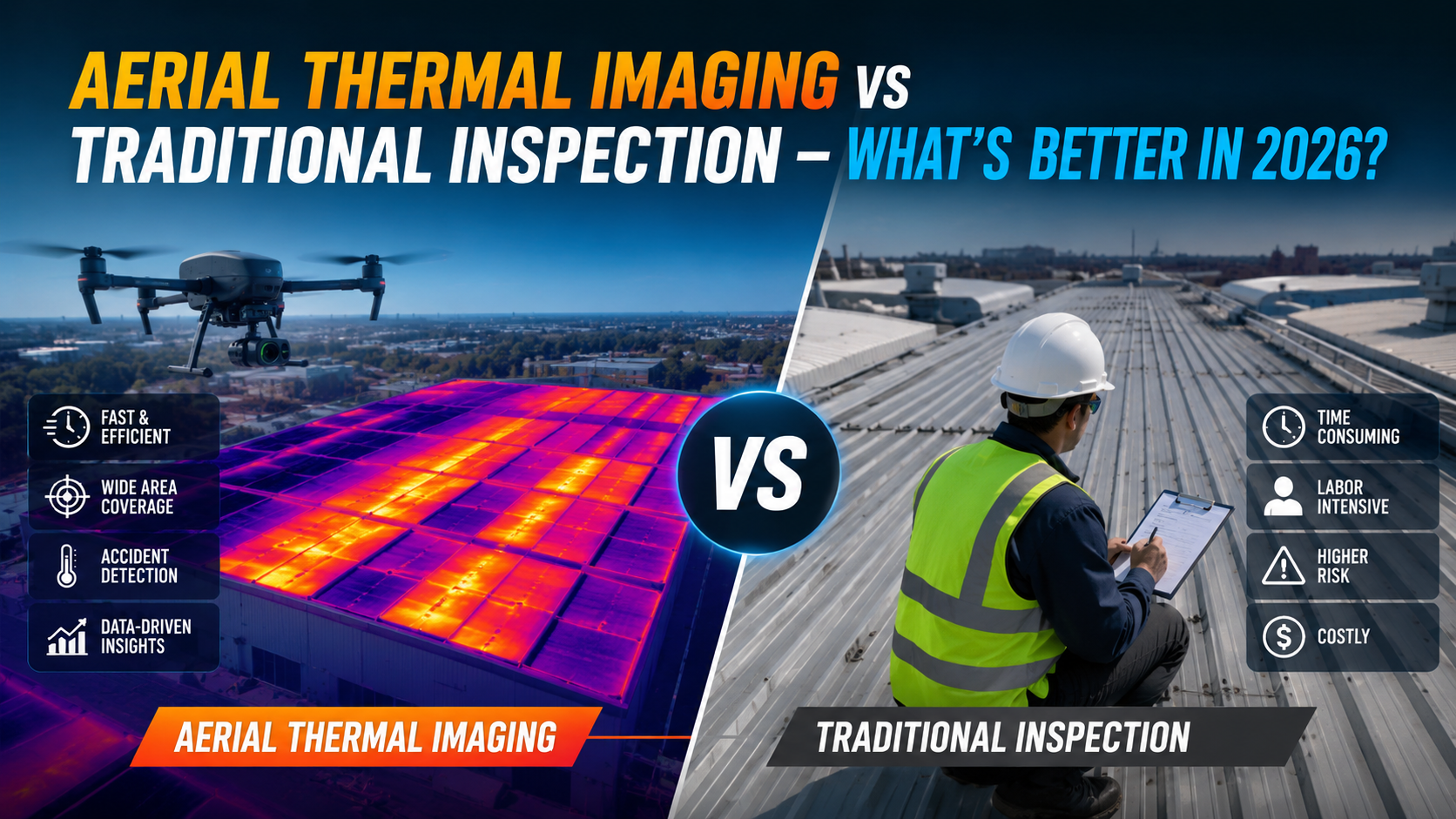
Many structural and electrical issues do not show visible damage right away. Moisture trapped inside a roof, insulation gaps behind walls, or overheating electrical parts can stay hidden for months.
This is why fault detection using thermal imaging has become central to modern inspection planning across buildings and energy systems.
Traditional inspections often react after damage occurs. Modern inspection planning focuses on early warnings instead.
With ongoing data collection:
This shift plays a key role in lowering downtime and unplanned repair costs across facility operations.
Despite the advancement of technology, hand-on inspections are still a part of a variety of programs for inspections.
Traditional approaches still provide:
The insurance industry and compliance cases typically require physical presence in the area to conduct final confirmations.
Still, traditional inspections face limits:
For large or complex properties, limited access can mean missing early warning signs that thermal data would detect faster.
Aerial inspection methods gained momentum not because they were new, but because they solved real problems.
Thermal sensors identify temperature differences across surfaces. When mounted on aerial platforms:
This supports building thermal imaging services that focus on prevention rather than reaction.
Aerial inspection workflows now serve:
In lieu of depending on limited view inspections, complete thermal records are created that allow for uniform reporting.
Inspection needs change by industry, but the benefits remain consistent.
Facilities teams utilize thermographic surveys for:
These data can help with long-term energy budgeting and planning.
Roof inspections benefit greatly from thermal data, especially after rain cycles.
This method reduces unnecessary tear‑offs and inspection hazards.
Solar and utility inspections rely on thermal patterns to locate:
What this really means is faster diagnostics with less labor disruption during operations.
There is no single method that works everywhere.
A managed approach ensures consistency across inspections, certified pilots, and standardized data delivery, an operational strength highlighted by Skyelink’s nationwide drone service model.
Modern workflows for inspection rely on equipment that is professional equipment and not consumer devices.
This tool combo permits repeat inspections, which can be compared and reviewed over time.
Inspections in 2026 are no longer about choosing between old and new methods. They are about using the right approach at the right moment.
Traditional inspections still play an important role. However, when it comes to efficiency, safety, and early detection of issues, aerial thermal techniques offer an obvious advantage, particularly when accompanied by a structured report and professional supervision.
When used together, these tools create inspections that are safer, clearer, and easier to act on. That’s where thermal drone inspection fits best, in a smarter inspection plan designed around real‑world conditions.
Organizations that utilize managed aerial services offered by Skyelink benefit from pilots who are certified, as well as consistent data and scalable inspection software designed to modernize asset management.
It’s used to determine variations in temperature that indicate the presence of moisture loss, heat, electrical stress, and insulation gaps, usually before the visible signs of damage are evident.
Many insurers accept thermal data as part of inspection documentation, especially when paired with clear reporting and professional oversight.
No. Most organizations use aerial reviews first, followed by targeted physical inspections where needed.
High‑risk or high‑value assets often benefit from annual or seasonal inspections to track changes over time.


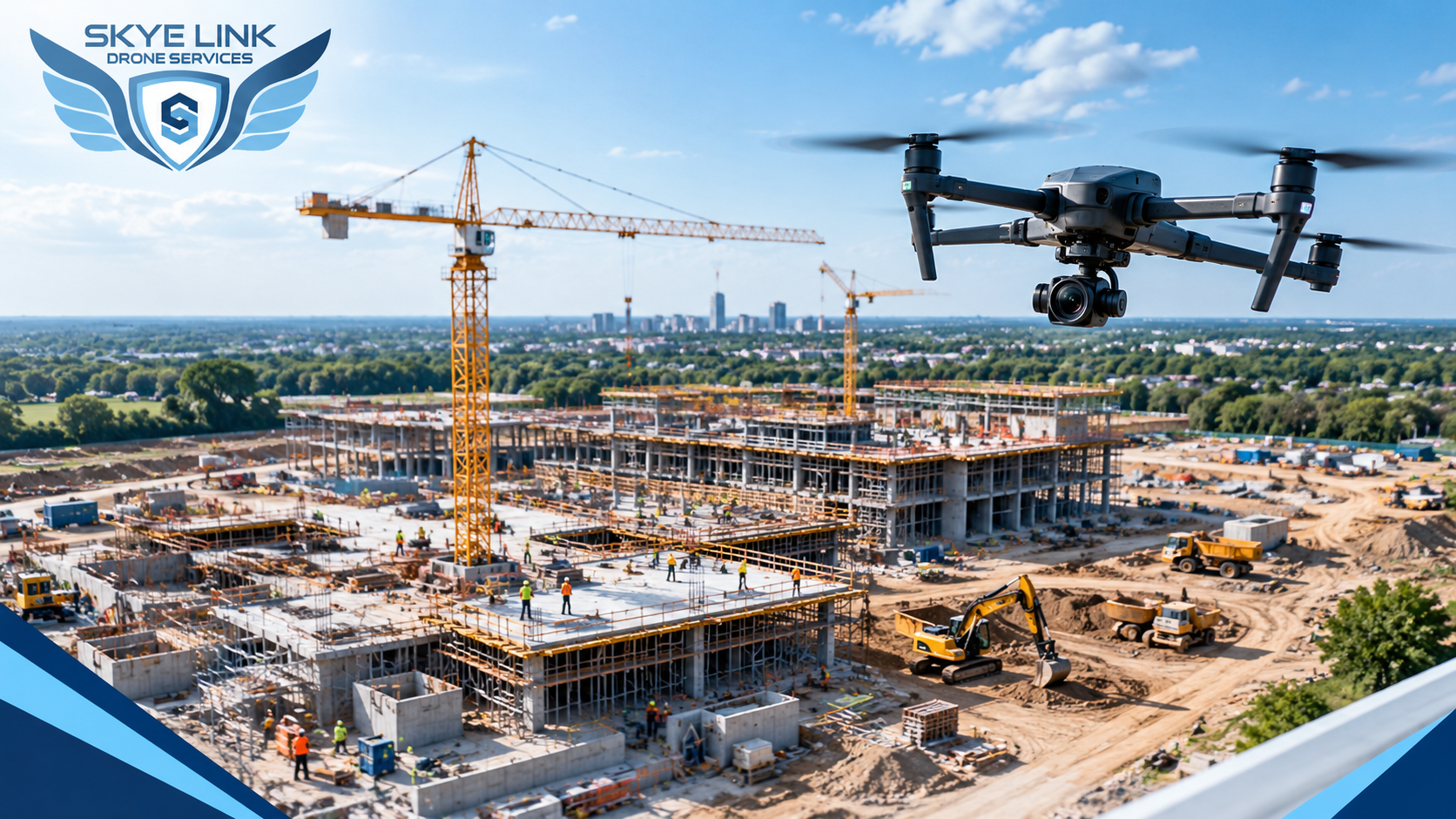
Explore the key benefits of drone filming for construction progress, including better site visibility, project documentation, and progress tracking.
Read article →
Learn how professional drone inspection companies help businesses improve safety, accuracy, efficiency, and inspection results.
Read article →Share your project details and the Skye Link team will recommend the right scope, deliverables, and next steps - usually within 24 hours.
Your operating partner for managed drone data solutions, serving solar, utility, construction, engineering and commercial real estate teams nationwide.Visit skyelink.org
520 Elliot St, Suite 500, Charlotte, NC 28202
(704) 594-5177
contact@skyelink.org



.svg)


