


In the past, the only way to conduct a thorough and accurate commercial roof inspection was to climb and survey the roof on foot. Thanks to technology innovations such as drones, aerial thermography, and powerful data analytics software, commercial roof inspections can be conducted much more safely, quickly, and cost-effectively.
The fact that drones enable roof surveys to be effectively done from the ground is a huge boost to the safety of both roofers and insurance adjusters alike while not compromising on the accuracy of roof measurements. Regardless of the type or steepness of the roof, drones equipped with high-resolution visual sensors capture images that can be processed by a cloud-based 3D modeling software to render detailed 3D models providing all the information on all roof areas, facets, pitches, etc. Not only is obtaining these accurate roof measurements using a drone safer, but it is much more efficient than having a 2 man team spend an entire day surveying a roof when a drone can capture all images needed to produce these measurements in as short as a half-hour.
In addition to visual drone inspections, other imaging types such as FLIR infrared sensors can be utilized for commercial roof inspections to provide another level of data that can be used for a commercial roof inspection or commercial roof claims. Our preferred thermal sensor a Skye Link is the radiometric Zenmuse XT/XT2 640×512 sensor that can be equipped to the DJI Matrice, which allows us to capture both visual and thermal data sets simultaneously. These data sets can be crossed referenced to provide detailed damage assessment reports of the roof.

Furthermore, the thermal drone inspection data is very useful for identifying potential leaks on commercial roofs as well as providing detailed temperature data that can be leveraged to locate problem areas. Additionally, infrared moisture maps of the commercial roof can be created for insurance claims and/or referenced by roofers for project planning purposes.
There are a handful of roof types that cannot be inspected using thermography. Infrared sensors work by identifying radiation coming from an object and converting it to a temperature. That object needs to be able to absorb and emit the radiation in order for the thermal sensor to detect it. Some roof types that are impossible to effectively conduct an infrared aerial drone inspection of:
Why Skye Link? We are a national drone service company for Insurance and Roofing. Our drone service platform streamlines aerial drone inspections including residential aerial property inspections, commercial roof drone surveys, aerial roof inspections, thermal mapping and infrared inspection for commercial roofing.
Interested in Learning More? Let’s Connect!
Talk to our professional team to get your questions answered and begin utilizing the power of drones and aerial data to effectively identify, monitor, and inspect commercial roofs.




Discover how aerial thermal imaging helps businesses detect issues, improve inspections, reduce costs, and make smarter decisions in 2026.
Read article →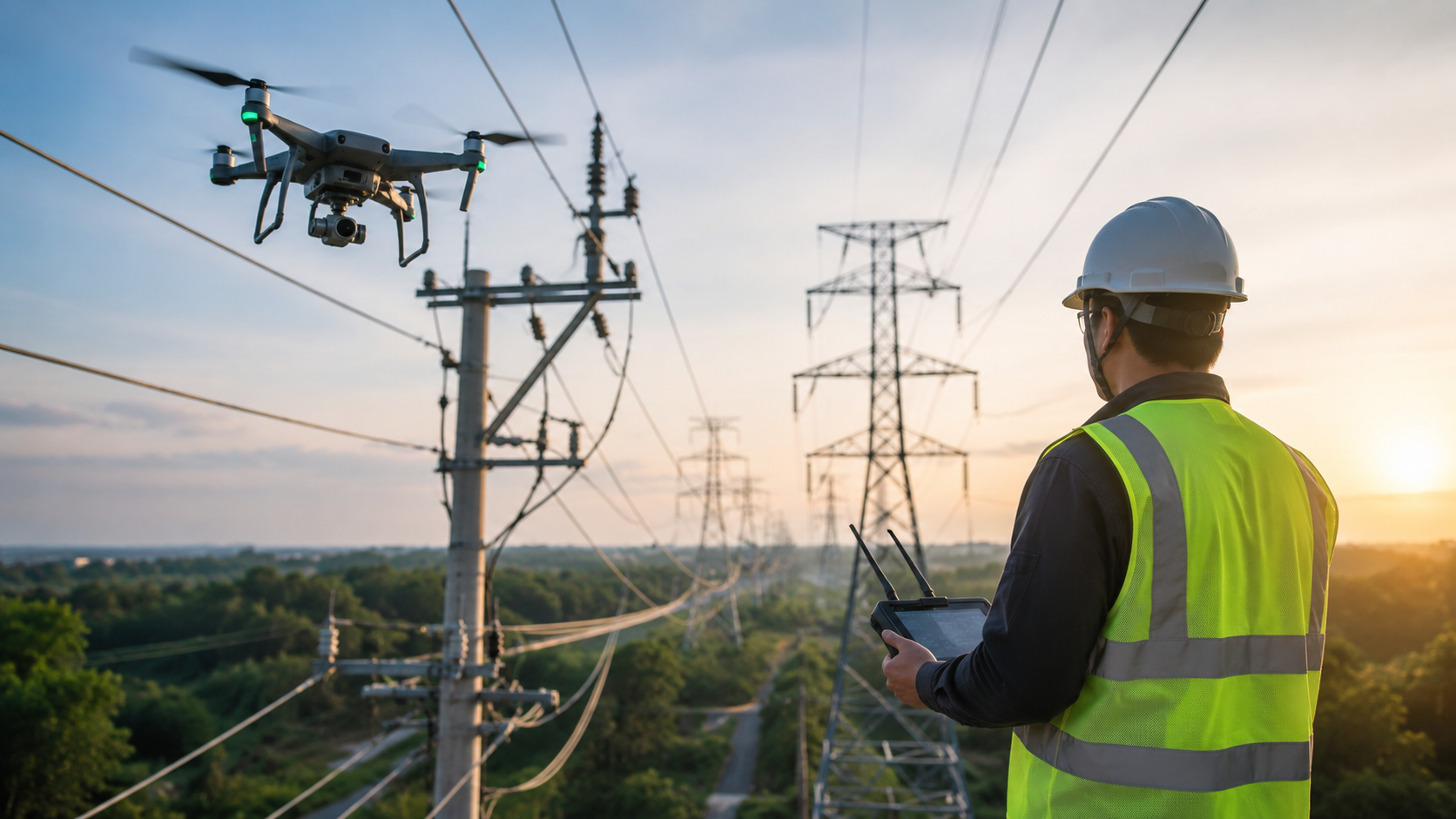
Explore the key benefits of using drones for utility inspections, from improved worker safety and accuracy to lower costs and faster results.
Read article →Share your project details and the Skye Link team will recommend the right scope, deliverables, and next steps - usually within 24 hours.
Your operating partner for managed drone data solutions, serving solar, utility, construction, engineering and commercial real estate teams nationwide.Visit skyelink.org
520 Elliot St, Suite 500, Charlotte, NC 28202
(704) 594-5177
contact@skyelink.org



.svg)


