Skye Link 17 July, 2026
Drone Thermal Inspections: Everything You Need to Know Before Hiring a Service
Objective
This guide helps you understand how Drone Thermal Inspections work, the types of issues they identify, and what you should look for when choosing the services of a professional. If you’re in charge of commercial buildings, utility assets, solar farms, or industrial facilities, you’ll be able to understand the ways that the thermal drone can increase the safety of your employees, cut downtime, and help you make better maintenance choices.
Key Takeaways
- Drone thermal inspections uncover invisible problems before they lead to costly repairs.
- Thermal cameras can detect the differences in temperature that conventional visual inspections are unable to detect.
- Professional drone thermal inspection services enhance security by eliminating the requirement for manually access to rooftops, towers, and equipment that is energized.
- Selecting a reputable provider ensures precise reports, high-quality data, and recommendations that can be implemented.
- Aerial thermal imaging supports predictive maintenance across construction, utilities, commercial real estate, manufacturing, and renewable energy.
Introduction
What if you could find a hidden electrical fault or roof leak before it caused an unexpected shutdown?
Here’s the thing: most problems start long before you notice them. Temperature fluctuations in the electrical components, on roofs or solar panels, are often a sign of problems that aren’t visible when you conduct a regular inspection.
According to the U.S. Department of Energy, infrared thermography is an effective tool to identify equipment problems and energy losses prior to them becoming major issues. When used in conjunction with Drone Thermal Inspections, businesses can check large assets with confidence quickly and efficiently with little disruption.
Table of Contents
- What Are Drone Thermal Inspections?
- How Does a Thermal Drone Inspection Work?
- Where Are Drone Thermal Inspection Services Used?
- Benefits of Professional Drone Inspections
- Choosing the Right Inspection Provider
- Drone Thermal Inspection Cost
- Frequently Asked Questions
What Are Drone Thermal Inspections?
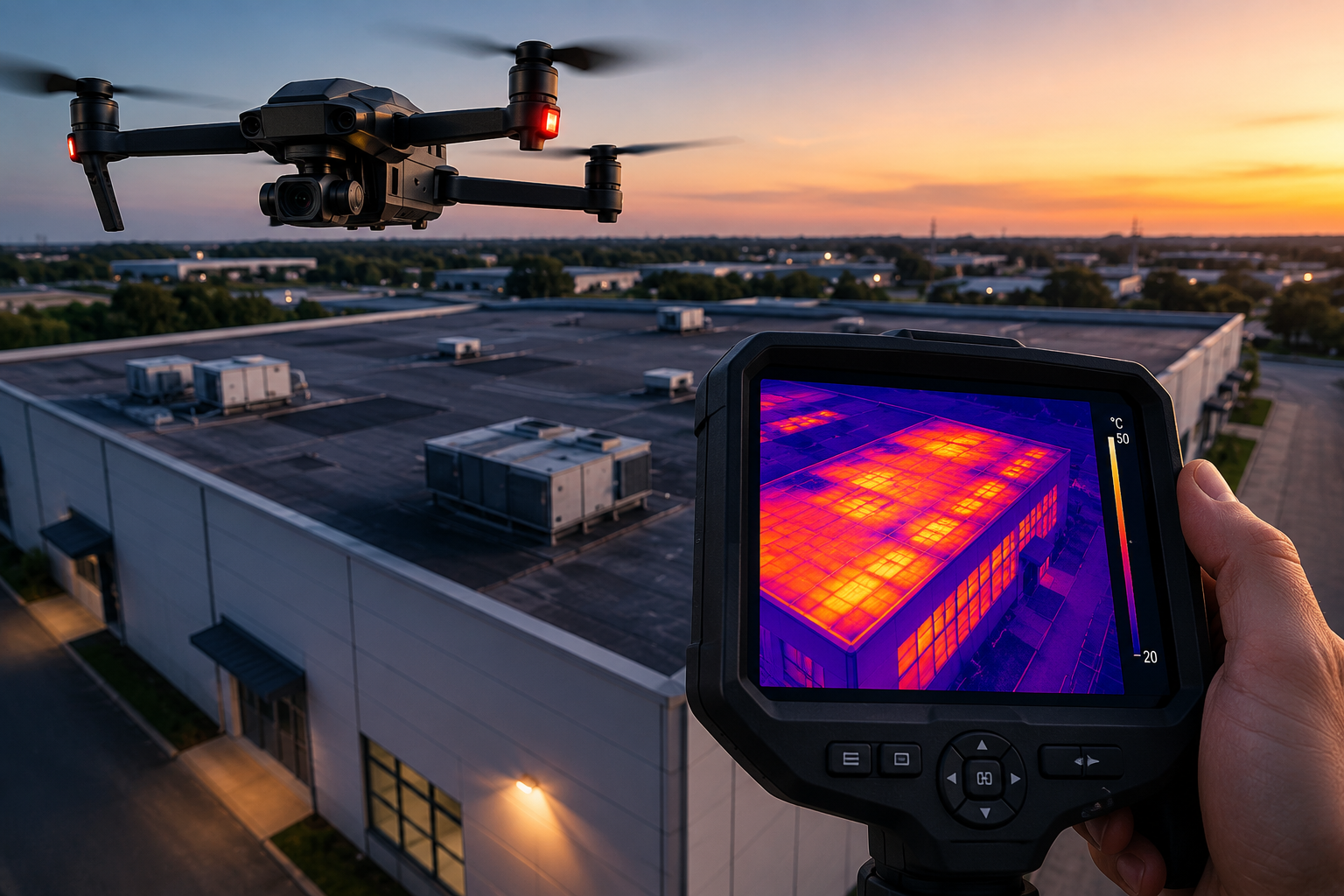
A Drone Thermal Inspection uses an unmanned aircraft fitted with an high resolution, infrared camera to determine the difference in temperature between buildings and equipment. Instead of taking only pictures that are visible, the thermal cameras can detect temperatures that could indicate concealed defects.
What this actually implies is that it will be able to detect issues before they are visible.
For instance, an overheated electrical connection could appear normal when viewed from a distance. The thermal image, however, will immediately reveal the unusual pattern of heat, which allows maintenance personnel to react prior to the equipment failing.
Professional drone infrared inspection services are currently widely used for:
- Commercial buildings
- Solar farms
- Utilities infrastructure
- Manufacturing facilities
- Construction projects
- Commercial roofing
- Energy assets from Wind
Contrary to traditional inspections, which typically require lifting, scaffolding, and even shutdowns for a short period, drones offer precise thermal data while also keeping workers safe on the ground.
How Does a Thermal Drone Inspection Work?
If you’re hiring a professional inspection company for the first time, knowing the process helps you understand what to expect.
The majority of commercial inspections are conducted in four easy steps.
1. Planning the Mission
Before the flight starts, the inspection team looks over your site, decides on the goals of inspection, examines the weather conditions, and then confirms the airspace requirements. Certified drone pilots follow FAA rules to ensure safe drone operations.
2. Capturing Thermal and Visual Images
The drone travels in a pre-planned direction while collecting infrared as well as standard images.
This lets inspectors compare the visible environment with patterns of heat, which makes it easier to find issues that can’t be visible to the naked eye.
3. Processing the Data
Following the departure, specially-designed software examines each image.
Instead of giving you hundreds of images, professionals at drone thermal inspections arrange the data into clear reports that pinpoint areas that require attention.
Some providers also offer:
| Deliverable | Why It Matters |
| Thermal Images | Identify heat anomalies |
| Visual Images | Confirm physical conditions |
| Inspection Reports | Help maintenance teams prioritize repairs |
| GIS/KML Files | Map defect locations for future reference |
Skyelink’s inspection workflow includes automated flight planning, certified pilots, and detailed reporting designed to help businesses make informed maintenance decisions. Their deliverables can include editable reports, thermal imagery, mapping files, and portfolio management tools for larger asset owners.
Where Are Drone Thermal Inspection Services Used?
One reason businesses continue investing in thermal drone technology is its flexibility. The same inspection method can solve very different maintenance challenges across industries.
Commercial Roofs
A Drone thermal inspection of roofs aids in identifying the accumulation of moisture under roofing materials prior to leaks becoming apparent.
Instead of reinstalling the entire roof area, maintenance teams are able to focus repairs on areas where there are problems.
Utility Infrastructure
A thermal drone inspection for power lines detects overheated connectors, damaged insulation, transformers, and electrical components prior to they break.
For utility companies, this means fewer emergency repairs and improved system reliability.
Commercial Buildings
A drone thermal inspection for buildings helps facility managers locate:
- Missing insulation
- HVAC performance issues
- Water intrusion
- Electrical hot spots
- Building envelope defects
These inspections support long-term maintenance planning while reducing unnecessary repair costs.
Solar Farms
Thermal imaging has become one of the most effective ways to inspect large solar installations.
Infrared cameras quickly identify overheating modules, damaged cells, and underperforming panels across thousands of solar assets. According to Skyelink, drone inspections can be up to 75% faster than manual inspections, allowing operations teams to inspect more sites while improving safety and reducing downtime.
Benefits of Professional Drone Thermal Inspection Services
When you’re responsible for expensive assets, maintenance is about more than fixing problems. It’s about finding them early enough to avoid unexpected downtime.
This is where professional Drone Thermal Inspection Services provide significant benefit. Instead of using manual inspections that could require scaffolding, lifts, or even equipment shutdowns, drones gather detailed thermal and optical data in a safe manner from the air.
Here’s what you gain.
Improved Safety
Inspection of rooftops solar arrays, transmission lines, or industrial equipment could expose workers to risky situations. Utilizing drones, inspection teams stay on the ground while collecting detailed data from hard-to-access areas.
Faster Results
Time matters, especially when you’re managing multiple facilities.
For example, a utility company responsible for dozens of substations can schedule drone inspections across several locations in far less time than traditional inspection methods.
For solar inspections, Skyelink notes that drone inspections can be up to 75% faster than manual inspections, allowing maintenance teams to inspect more sites in the same timeframe.
Better Maintenance Planning
A high-quality thermal imaging inspection drone won’t just identify issues. It aids maintenance teams in deciding which problems require immediate attention and which issues could be scheduled for the planned maintenance window.
This means fewer urgent repairs and a better budget all through the year.
Better Data for Better Decisions
Professional inspections combine aerial thermal imaging with high-resolution visual imagery, giving facility managers a complete view of asset conditions instead of relying on assumptions.
What Should You Look for Before Hiring a Drone Inspection Company?
Not every drone company offers the same level of experience. Before signing a contract, take a few minutes to ask the right questions.
Your Hiring Checklist
| What to Ask | Why It Matters |
| Are your pilots FAA-certified and insured? | Helps ensure safe and compliant operations. |
| Do you have experience in my industry? | Industry knowledge improves inspection quality. |
| What reports will I receive? | Clear reports make maintenance planning easier. |
| What thermal equipment do you use? | Better sensors produce more accurate results. |
| Can you support projects across multiple locations? | Helpful for companies managing assets nationwide. |
A trusted provider should provide information on how the data from inspections is taken, reviewed, and sent out. Skyelink is one example. It offers thermal imagery as well as editable inspection reports. Maps, spreadsheet summaries, as well as a portfolio management portal designed for large asset owners.
Common Mistakes to Avoid
- Choosing the lowest quote without reviewing experience.
- Hiring a company that only offers drone photography instead of thermal inspections.
- Not asking about insurance or FAA certification.
- Accepting reports that only include photos without analysis.
- Ignoring post-inspection support.
Drone Thermal Inspection Cost: What Affects Pricing?
One of the first questions businesses ask is how much a Drone Thermal Inspection costs.
The answer depends on several factors rather than a fixed price.
Common pricing factors include:
- Property or asset size.
- Number of structures or systems being inspected.
- Flight complexity.
- Travel requirements.
- Thermal reporting and data analysis.
- Inspection frequency.
While price matters, the lowest estimate isn’t always the best value.
A detailed inspection with actionable findings can help prevent equipment failures that cost far more than the inspection itself. That’s why many organizations focus on long-term value instead of choosing the cheapest option.
Real-World Example
Finding Solar Panel Problems Before They Affect Energy Production
Imagine you’re responsible for maintaining a commercial solar farm with thousands of panels.
Everything appears normal during a visual inspection, but one section is producing less electricity than expected.
A thermal imaging drone inspection quickly uncovers several overheating devices that aren’t visible to the untrained eye. Maintenance workers receive a report indicating exactly where the panels are located, which allows repairs to be initiated immediately rather than scouring the entire area.
This kind of inspection can help decrease downtime and improve the efficiency of the system overall. Skyelink’s aerial thermography solutions adhere to the accepted inspection procedures and provide precise analytics to help with maintenance plans for solar asset owners.
Make Smarter Inspection Decisions Before Problems Grow
Hidden defects rarely stay hidden forever.
If you are in charge of commercial buildings, utility infrastructure, manufacturing facilities, or renewable energy resources, Drone Thermal Inspections provides you with an easier and safer method of identifying issues before they lead to costly repairs.
Working with a reputable provider gives you more than just aerial photos. You will receive precise data as well as detailed reports and practical advice that can assist you in planning maintenance with confidence.
If you’re contemplating the next project for inspection, Skyelink offers pilots who are certified, as well as nationwide deployment. Professional thermal imaging services for aerial use, specifically designed to assist businesses in collecting reliable data on inspections quickly and securely.
Frequently Asked Questions
1. What can Drone Thermal Inspections detect?
They can detect overheated electrical components, water trapped on roofs, insulation gaps, HVAC issues, damaged solar panels, and other issues related to temperature that are hard to spot in an inspection.
2. Do you believe that Drone Thermal Inspections are exact?
Yes. If performed by skilled professionals with high-end infrared cameras, they can provide accurate temperature data that aids in preventive maintenance and asset management.
3. How much will a Drone Thermal Inspection cost?
Pricing is based on the size of the asset, its complexity in inspection, along with travel requirements and reporting requirements. Most companies prepare customized quotations after reviewing the scope of the project.
4. Which industries would benefit the most from Drone Thermal Inspection Services?
Commercial real properties, utilities, construction, manufacturing, telecommunications, roofing, oil and gas, and renewable energy firms regularly employ thermal drone inspections to enhance maintenance plans.